Choosing running shoes for flat feet used to mean picking between heavy medial wedges or stiff plastic plates designed to force the arch upward. Modern shoe design has moved away from rigid medial posting toward broader base geometries, raised midsole sidewalls, and dynamic guidance systems that support low arches without bruising the instep.
Below is an engineering and performance breakdown of the top 11 running shoes for flat feet, followed by a full technical comparison matrix and a guide to matching shoe geometry to your specific foot mechanics.
1. Quick Recommendations by Runner Profile
- Best Max Cushion for Severe Overpronation: ASICS Gel-Kayano 32/33 or Hoka Gaviota 5/6
- Best Daily Mileage Workhorse: Brooks Adrenaline GTS 25 or Saucony Guide 17/19
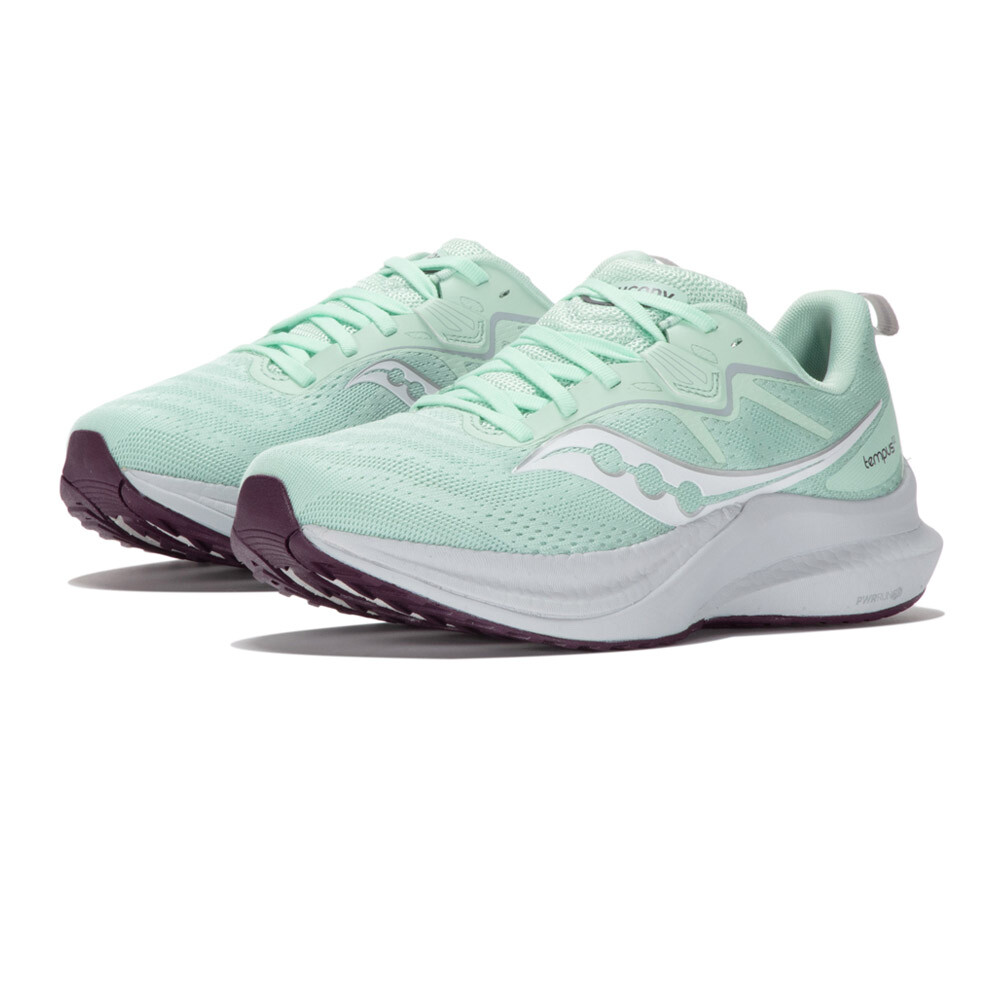
- Best for Fast Days and Marathon Workouts: Saucony Tempus 2
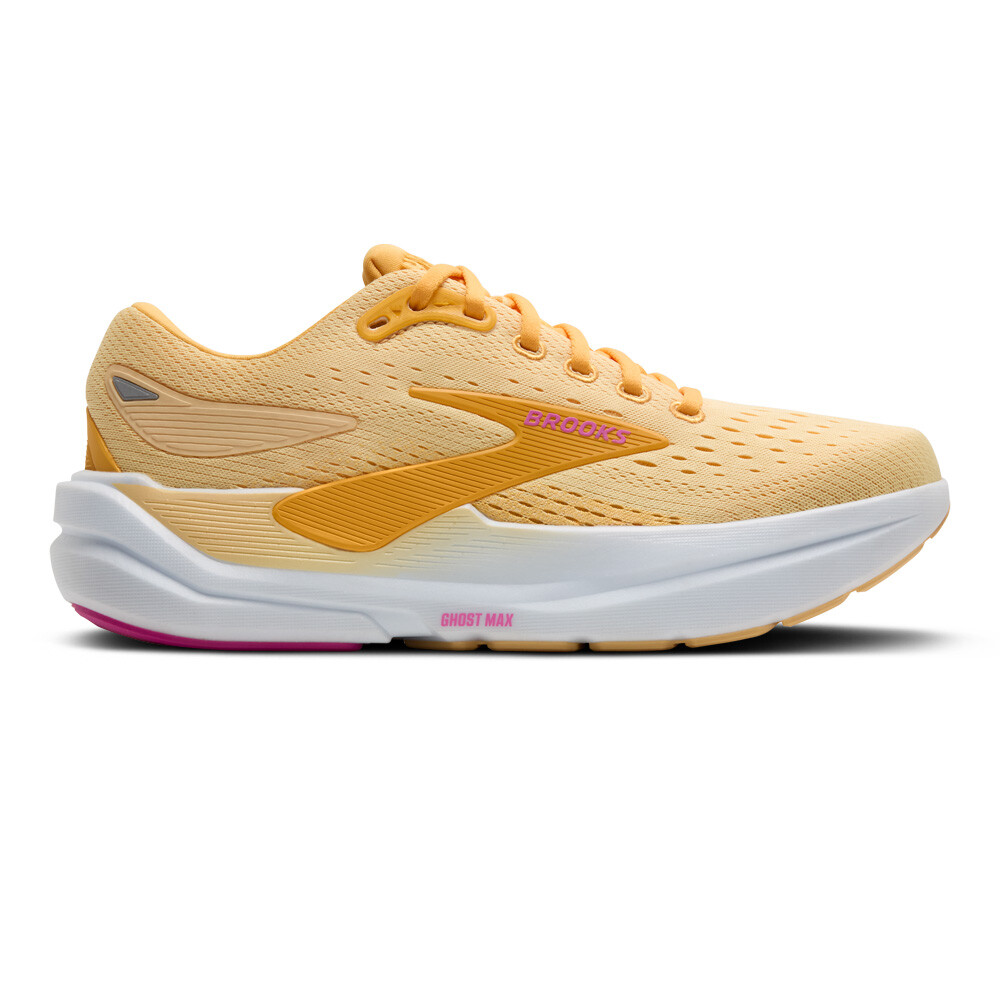
- Best for Sensitive Arches and Blister Avoidance: Brooks Ghost Max 3 (Stable-Neutral)
- Best for Wide Splay, Straight Lasts, and Bunions: Altra Paradigm 7/8 or New Balance Fresh Foam X 860v15 (up to 4E)
2. In-Depth Reviews: The 11 Best Running Shoes for Flat Feet
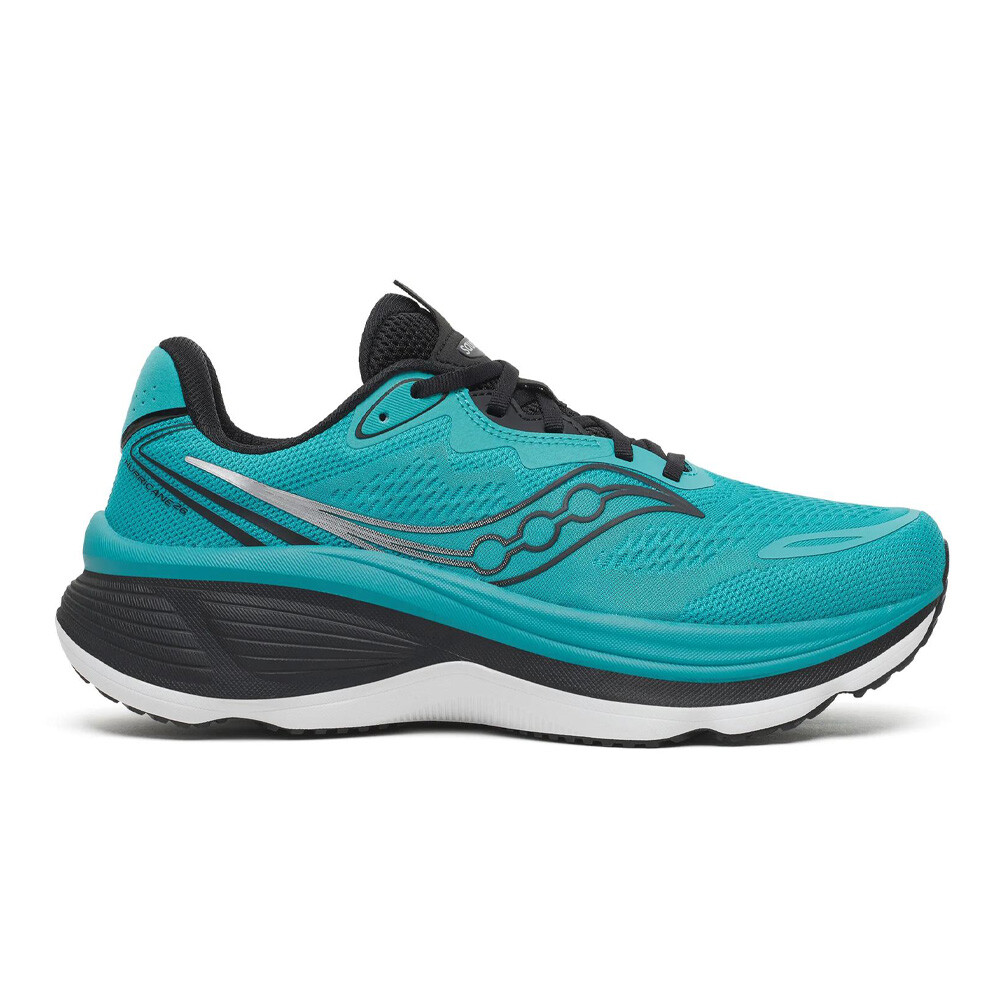
1. Saucony Hurricane 24 / 26
- Target Pronation
- Moderate to severe overpronation
- Stability Mechanism
- CenterPath geometry (dual-density cradle and broad base)
- Midsole
- PWRRUN PB core encased in a firmer PWRRUN carrier frame
- Stack / Drop
- 38.3 mm heel / 32.4 mm forefoot (6 mm drop)
- Weight
- 10.6 oz (300 g) men / 9.8 oz (278 g) women
- Widths
- Standard (D), Wide (2E)
- MSRP
- $160 / £145
What it feels like to run in:
Soft, protective, and smooth. The beaded super-critical PWRRUN PB core absorbs road impact, while the late-stage forefoot rocker and beveled heel keep gait transitions rolling forward despite the high stack.
Why it works for flat feet:
Traditional stability shoes use medial posts that jab into collapsed arches. The Hurricane uses pure geometry instead: an expansive base measuring up to 129.8 mm in the forefoot paired with raised foam sidewalls that cup the foot. This prevents the midfoot from rolling over the medial edge without concentrating pressure on the navicular bone.
Trade-offs:
Weighing over 10.5 oz, it carries noticeable bulk. The firmer PWRRUN outer frame mutes some of the superfoam rebound, making it suitable for easy base miles and recovery rather than speed sessions.
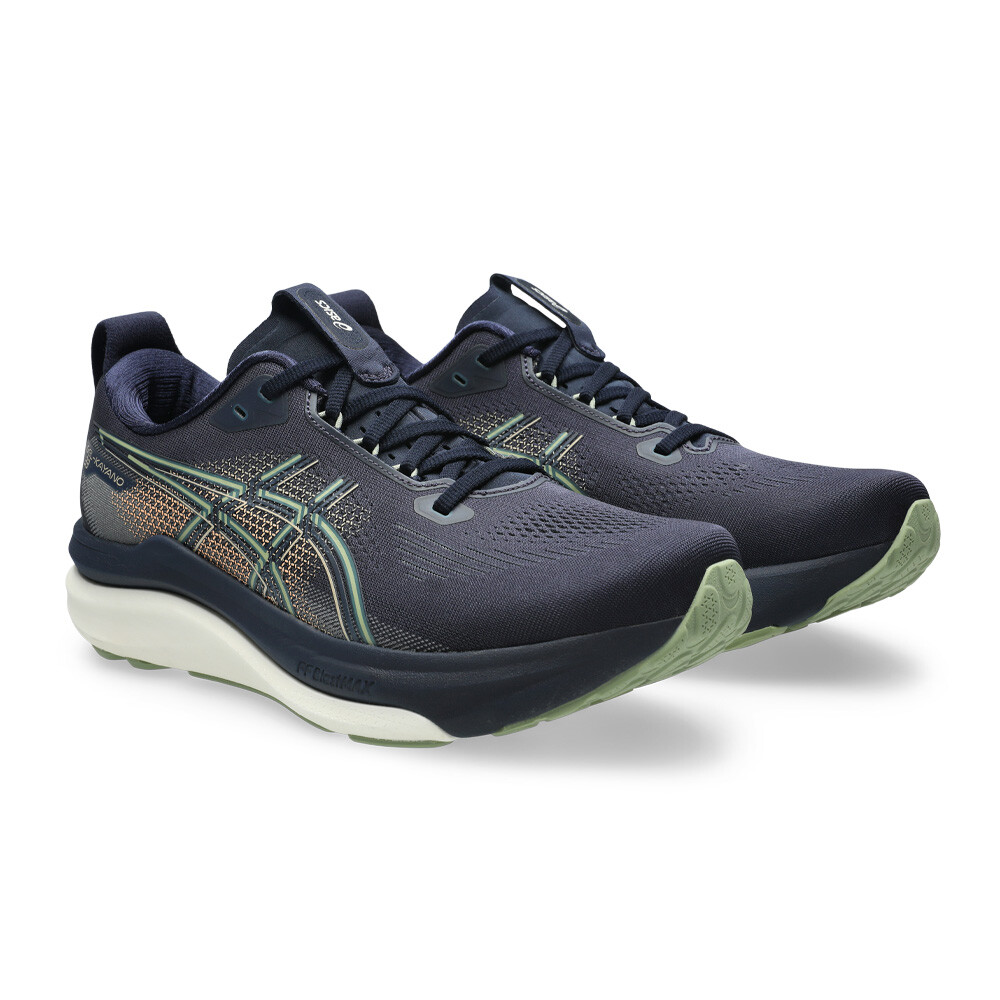
2. ASICS Gel-Kayano 32 / 33
- Target Pronation
- Moderate to severe overpronation
- Stability Mechanism
- 4D Guidance System / FluidSupport
- Midsole
- FlyteFoam Blast Plus Eco + rearfoot PureGEL
- Stack / Drop
- 40.0 mm heel / 32.0 mm forefoot (8 mm drop)
- Weight
- 10.7 oz (303 g) men / 9.1 oz (258 g) women
- Widths
- Narrow (B), Standard (D), Wide (2E), Extra-Wide (4E)
- MSRP
- $165 / £160
What it feels like to run in:
Planted, forgiving, and structured. The step-in feel is plush, trading explosive responsiveness for consistent, shock-damped comfort that keeps form intact on long weekend runs.
Why it works for flat feet:
ASICS abandoned rigid medial plastic in favor of an adaptive foam unit placed directly beneath the arch that rebounds under load. Torsional rigidity tests 38% stiffer than the industry average, locking down the rearfoot alongside a deep calcaneal counter accepted by the American Podiatric Medical Association.
Trade-offs:
At 10.7 oz with modest energy return, the ride feels flat when trying to pick up the pace. The standard forefoot tapers along the pinky toe, making the wide or extra-wide variant mandatory for runners with collapsed, wide forefeet.
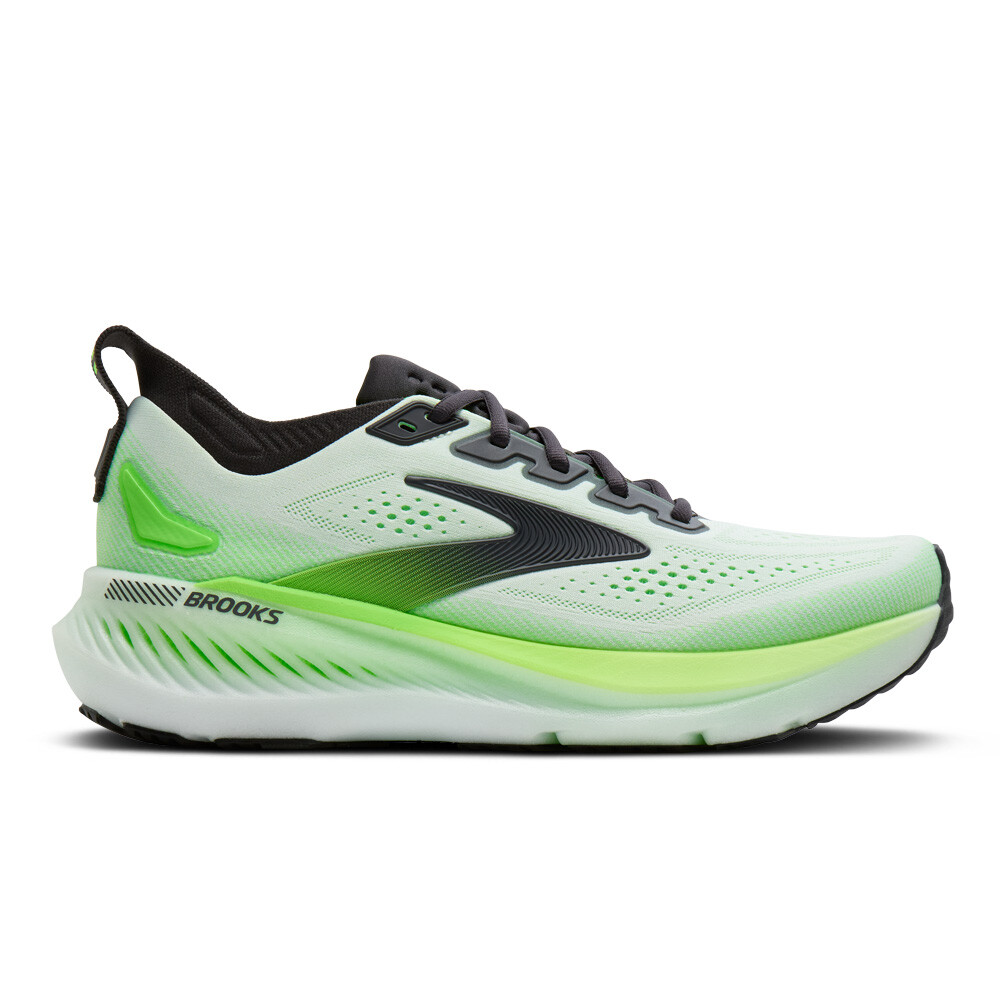
3. Brooks Glycerin GTS 22
- Target Pronation
- Moderate overpronation
- Stability Mechanism
- Perimeter GuideRails (dual medial and lateral)
- Midsole
- DNA Tuned (nitrogen-infused dual-cell EVA)
- Stack / Drop
- 37.8 mm heel / 27.7 mm forefoot (10 mm drop)
- Weight
- 10.8 oz (306 g) men / 9.5 oz (269 g) women
- Widths
- Standard (D), Wide (2E), Extra-Wide (4E)
- MSRP
- $165 / £165
What it feels like to run in:
High-cushion comfort with a firm baseline. Dual-cell foam design uses larger cells in the heel for pillowy shock absorption and smaller, denser cells in the forefoot for stable push-offs.
Why it works for flat feet:
Low arches often initiate excess inward roll at the heel strike. The Glycerin GTS 22 features a wide 97.1 mm heel base paired with holistic GuideRails that only apply corrective force when the foot deviates from its natural motion corridor, keeping knees and ankles aligned without creating localized arch arches.
Trade-offs:
Energy return is modest at 53.1% in lab tests, and the upper mesh is thick and runs warm in high temperatures.
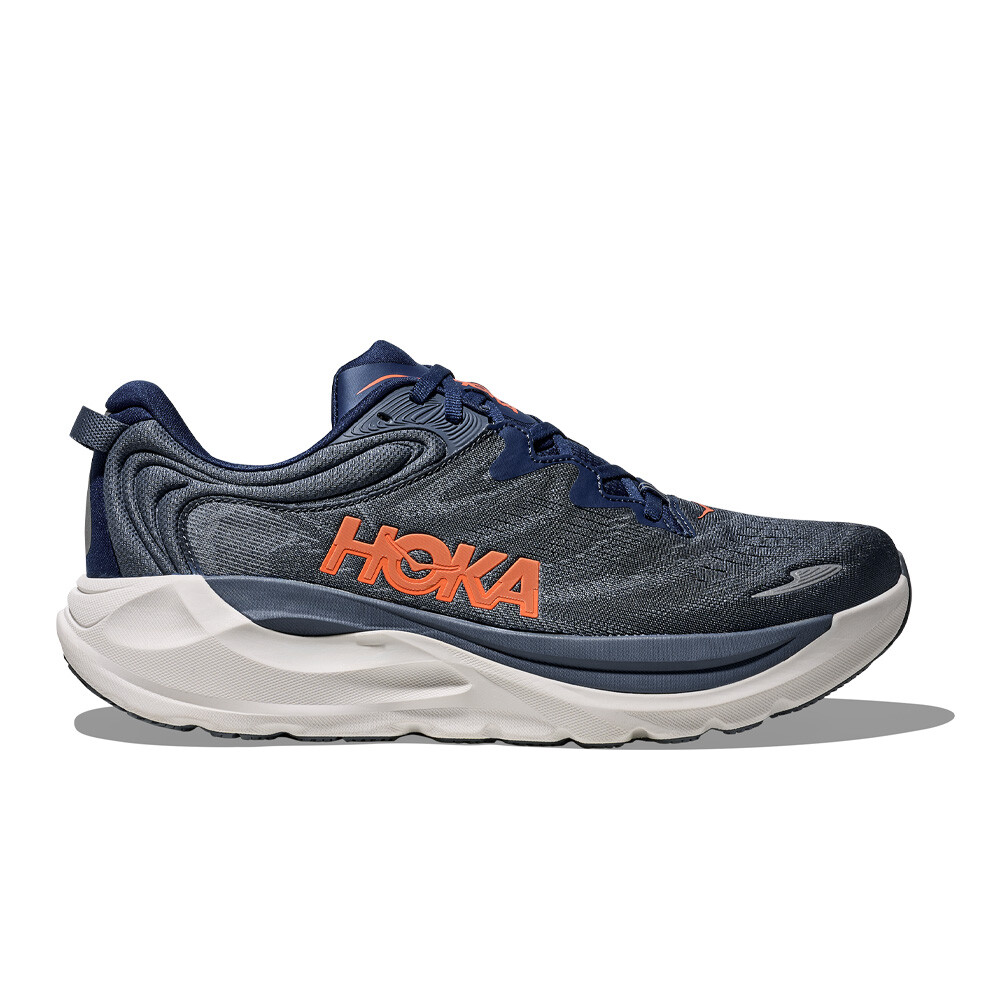
4. Hoka Gaviota 5 / 6
- Target Pronation
- Severe overpronation / maximum support
- Stability Mechanism
- H-Frame interlocking chassis
- Midsole
- Soft CMEVA with Early Stage MetaRocker
- Stack / Drop
- 39.0 mm heel / 33.0 mm forefoot (6 mm drop)
- Weight
- 10.9 oz (309 g) men / 9.1 oz (258 g) women
- Widths
- Standard (D), Wide (2E)
- MSRP
- $175 / £150
What it feels like to run in:
Wide, steady, and protective. The platform provides substantial underfoot isolation, while the rocker eases stride turnover to prevent the shoe from feeling like a flat plank.
Why it works for flat feet:
Severe pes planus can cause dynamic foot wobble both medially and laterally. The H-Frame wraps stabilizing foam around both perimeter borders, securing the foot centrally over the wide sole unit so the arch does not sag over the edge.
Trade-offs:
The shoe is heavy (10.9 oz) and provides minimal ground feel or cornering agility. Runners with narrower midfeet may find the voluminous base difficult to lock down securely.
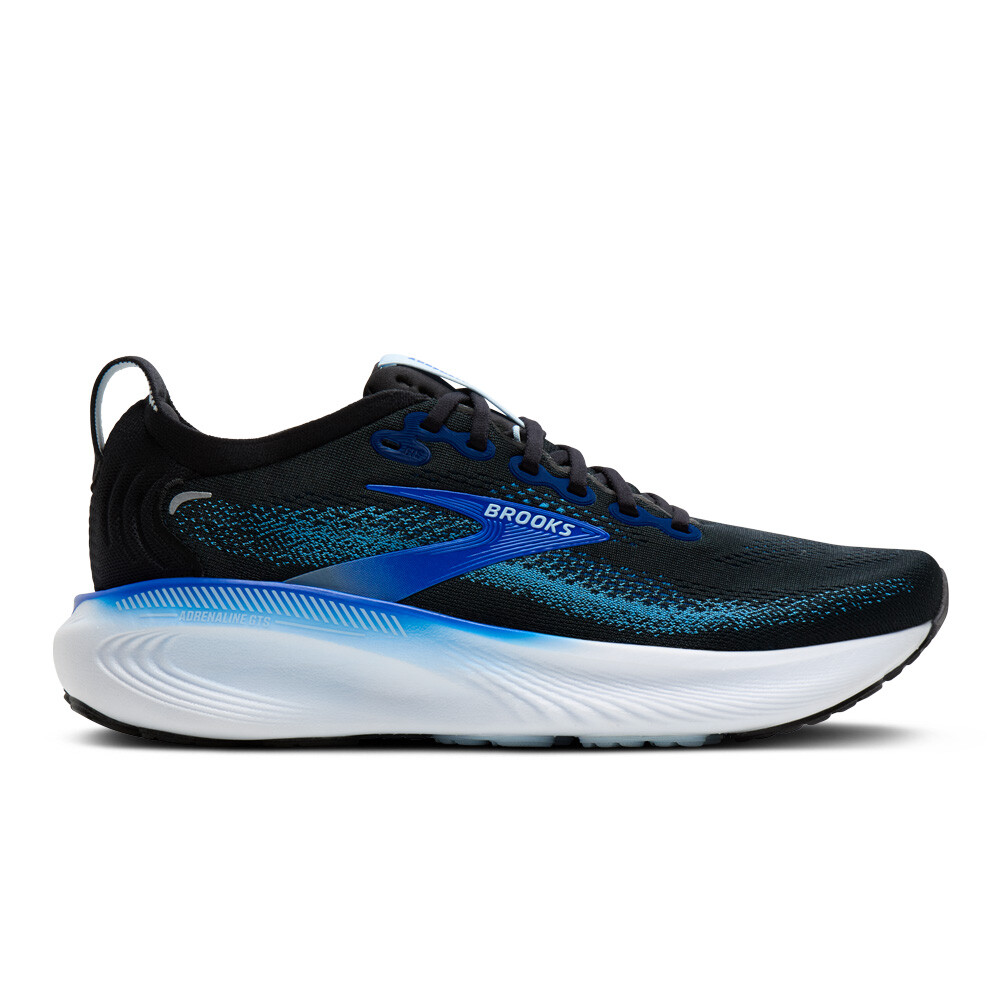
5. Brooks Adrenaline GTS 25
- Target Pronation
- Mild to moderate overpronation
- Stability Mechanism
- Perimeter GuideRails
- Midsole
- DNA Loft v3 (supercritical nitrogen-infused EVA)
- Stack / Drop
- 37.0 mm heel / 27.0 mm forefoot (10 mm drop)
- Weight
- 10.4 oz (295 g) men / 9.5 oz (269 g) women
- Widths
- Narrow (B), Standard (D), Wide (2E), Extra-Wide (4E)
- MSRP
- $155 / £145
What it feels like to run in:
Balanced, predictable, and durable. The nitrogen-infused DNA Loft v3 foam softens ground impact compared to older editions, while maintaining a firm platform that resists bottoming out.
Why it works for flat feet:
The 10 mm heel drop reduces dynamic strain on the Achilles tendon and posterior tibial tendon—two structures overloaded by dynamic arch collapse. Available in four widths, the upper prevents lace bite over flatter, lower insteps and fits custom orthotics easily.
Trade-offs:
With a rearfoot energy return hovering near 52%, the ride prioritizes motion control over bounce.
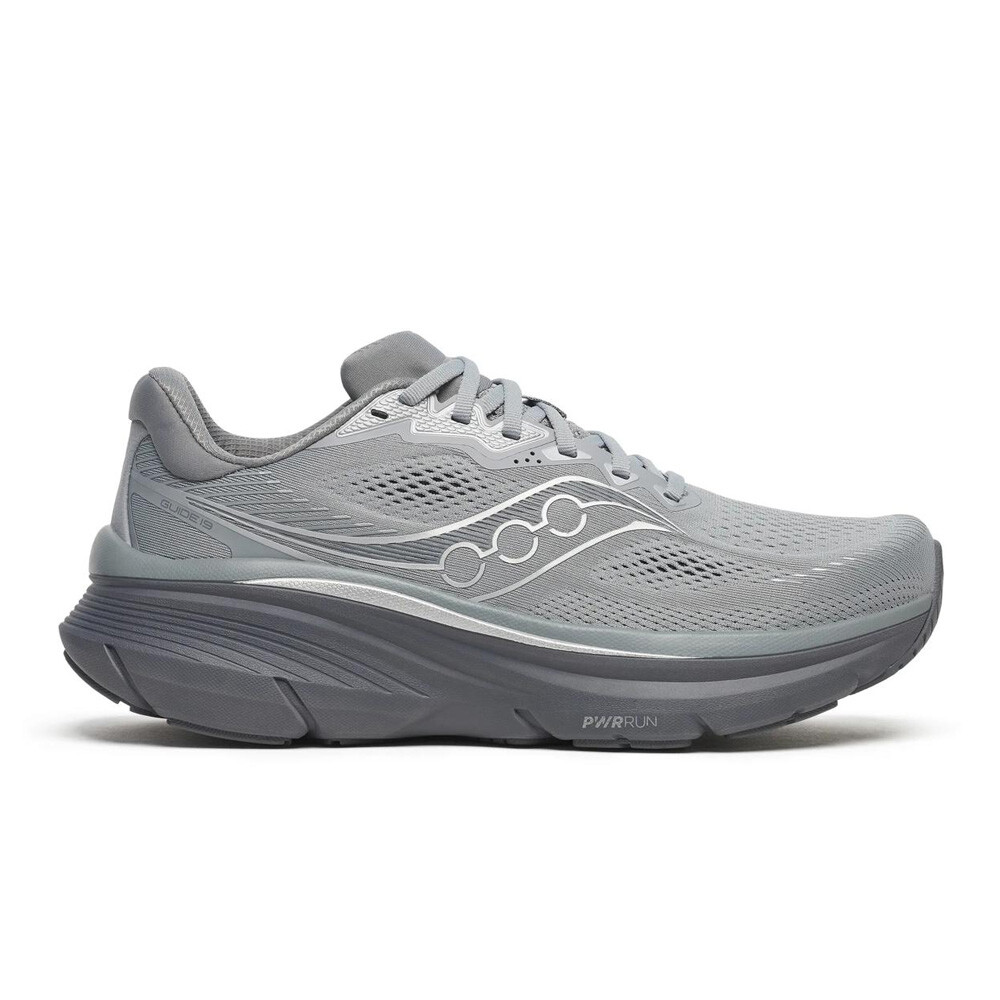
6. Saucony Guide 17 / 19
- Target Pronation
- Mild overpronation / stable-neutral
- Stability Mechanism
- Asymmetrical CenterPath geometry
- Midsole
- PWRRUN EVA with PWRRUN+ sockliner
- Stack / Drop
- 35.0 mm heel / 29.0 mm forefoot (6 mm drop)
- Weight
- 9.4 oz (266 g) men / 8.1 oz (230 g) women
- Widths
- Standard (D), Wide (2E), Extra-Wide (4E)
- MSRP
- $140 / £135
What it feels like to run in:
Nimble and consistent. The PWRRUN+ sockliner adds soft step-in comfort, while the gentle rocker profile promotes a smooth roll-through.
Why it works for flat feet:
The shoe removes all medial wedges in favor of wide platform flaring and sidewalls that cup the heel and midfoot. This guides the foot into place without the high-pressure medial contact that produces blisters on runners with flat insteps.
Trade-offs:
Standard EVA cushioning feels firmer than PEBA foams. The 6 mm offset also shifts more workload onto the Achilles tendon and calf muscles compared to traditional 10 mm trainers.
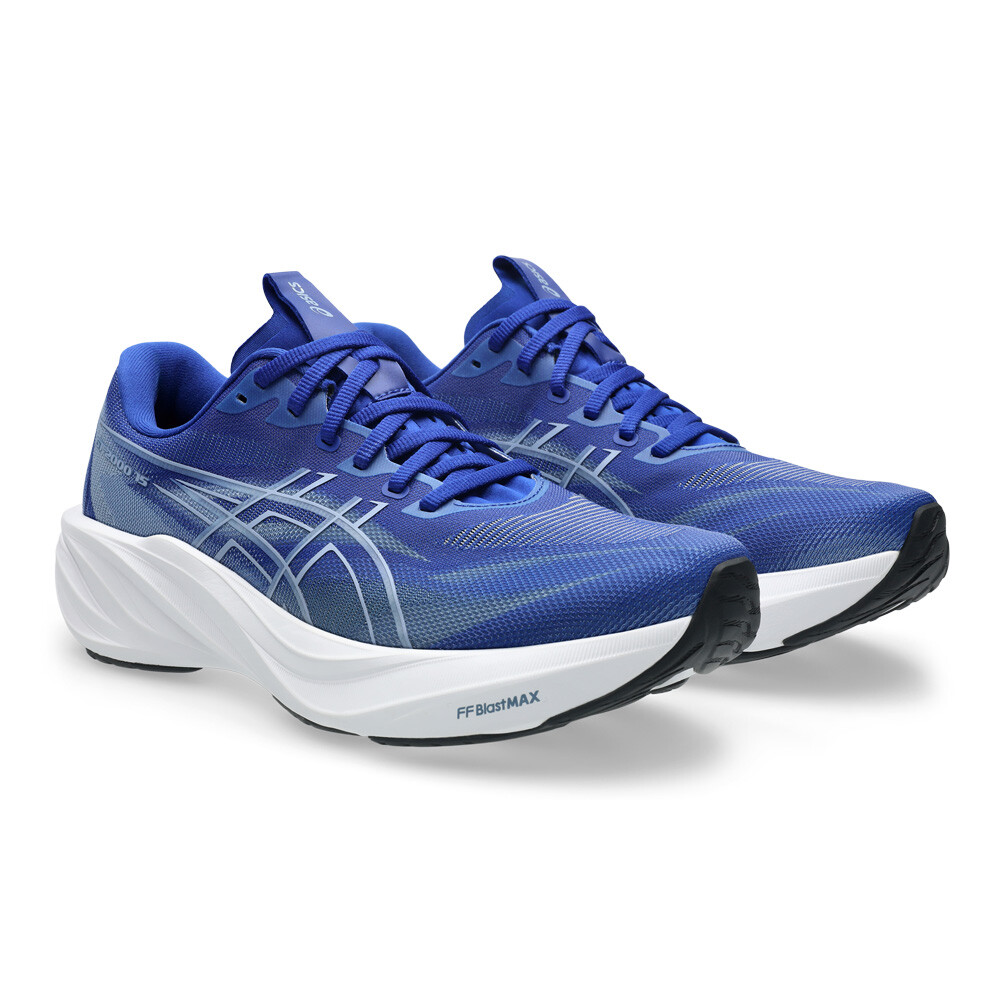
7. ASICS GT-2000 14 / 15
- Target Pronation
- Mild to moderate overpronation
- Stability Mechanism
- 3D Guidance System
- Midsole
- FlyteFoam Blast Plus with rearfoot PureGEL
- Stack / Drop
- 38.2 mm heel / 30.0 mm forefoot (8 mm drop)
- Weight
- 8.9 oz (252 g) men / 7.8 oz (221 g) women
- Widths
- Standard (D), Wide (2E), Extra-Wide (4E)
- MSRP
- $145 / £130
What it feels like to run in:
Responsive and lightweight. It provides a more connected road feel than maximal-stack alternatives, making it versatile across both recovery days and moderate tempo paces.
Why it works for flat feet:
It delivers high torsional support (rated 4/5 for twist resistance) at a sub-9-ounce weight. Low arches get reliable rearfoot guidance from sole flaring and a beveled heel without dragging around the mass of a max-cushion trainer.
Trade-offs:
The forefoot stack is thinner than high-cushion stability models, resulting in firmer ground feedback under the metatarsals on longer runs.
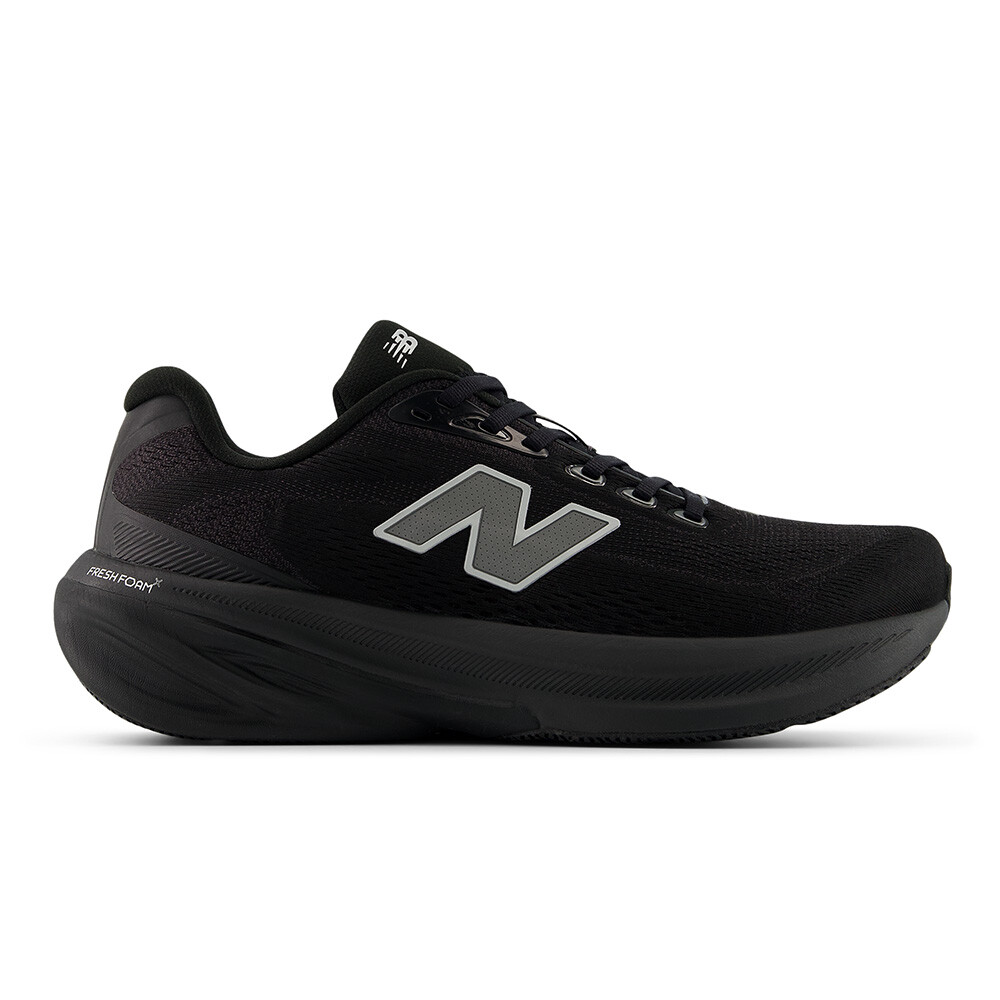
8. New Balance Fresh Foam X 860v15
- Target Pronation
- Moderate overpronation
- Stability Mechanism
- Integrated EVA Stability Plane + multi-density base
- Midsole
- Fresh Foam X with rockered geometry
- Stack / Drop
- 36.0 mm heel / 28.0 mm forefoot (8 mm drop)
- Weight
- 10.2 oz (289 g) men / 8.5 oz (241 g) women
- Widths
- Narrow (B), Standard (D), Wide (2E), Extra-Wide (4E)
- MSRP
- $140 / £140
What it feels like to run in:
Firm, planted, and durable. The gentle rocker eases toe-off, preventing the shoe from feeling stiff through the final third of the gait cycle.
Why it works for flat feet:
The 860v15 is constructed on a straight last rather than a curved footprint. Flat arches fill out the entire width of the midfoot, and this straight foundation ensures the arch never hangs over the edge of the midsole. It also pairs cleanly with rigid custom orthotics.
Trade-offs:
The dual-density foam setup delivers a firmer ride with minimal bounce, and the upper mesh runs warm during long summer sessions.
9. Saucony Tempus 2
- Target Pronation
- Dynamic stability (uptempo, threshold, marathon pace)
- Stability Mechanism
- Contoured asymmetrical PWRRUN EVA frame
- Midsole
- Full-length PWRRUN PB superfoam core
- Stack / Drop
- 36.5 mm heel / 28.5 mm forefoot (8 mm drop)
- Weight
- 8.9 oz (252 g) men / 7.7 oz (218 g) women
- Widths
- Standard (D), Wide (2E)
- MSRP
- $170 / £155
What it feels like to run in:
Bouncy, fast, and light. With energy return hitting 70% to 72% in lab tests, it provides the spring of an elite racer while maintaining a secure, guided platform.
Why it works for flat feet:
Most stability models are heavy and slow. The Tempus 2 embeds a contoured EVA frame around a soft PEBA core, supporting the arch during rapid transitions without the deadening effect of dense posting.
Trade-offs:
The raised medial rim of the firmer EVA carrier can rub against low navicular bones on runners with completely rigid, flat feet, posing a blister risk on runs past 10 miles.
10. Altra Paradigm 7 / 8
- Target Pronation
- Mild to moderate overpronation
- Stability Mechanism
- Medial GuideRail + FootShape anatomical fit
- Midsole
- Altra EGO MAX foam
- Stack / Drop
- 30.0 mm heel / 30.0 mm forefoot (0 mm drop)
- Weight
- 9.3 oz (264 g) men / 8.0 oz (227 g) women
- Widths
- Standard (FootShape), Wide (2E)
- MSRP
- $170 / £150
What it feels like to run in:
Balanced and spacious under the forefoot. The zero-drop platform encourages an upright posture and a midfoot ground contact.
Why it works for flat feet:
Flat feet spread wide under full body weight. Altra’s foot-shaped toe box provides the space required for natural toe splay, reducing friction across bunions, while the medial GuideRail steps in only when dynamic arch collapse turns excessive.
Trade-offs:
Shifting to zero drop increases mechanical load across the Achilles tendon and calf muscles. Runners battling active posterior tibial tendonitis should transition into zero drop slowly.
11. Brooks Ghost Max 3 (Stable-Neutral Option)
- Target Pronation
- Neutral to mild overpronation / sensitive low arches
- Stability Mechanism
- Flared sole geometry + GlideRoll Rocker
- Midsole
- DNA Loft v3 nitrogen-infused foam
- Stack / Drop
- 39.0 mm heel / 33.0 mm forefoot (6 mm drop)
- Weight
- 10.8 oz (306 g) men / 9.7 oz (275 g) women
- Widths
- Standard (D), Wide (2E), Extra-Wide (4E)
- MSRP
- $150 / £140
What it feels like to run in:
Soft, rolling, and stable without feeling intrusive. The GlideRoll Rocker tips forward through push-off, taking pressure off the ball of the foot.
Why it works for flat feet:
Many runners have low or flat arches that do not dynamically overpronate. For these runners, stability posts and GuideRails can cause inner-arch bruising and blisters. The Ghost Max 3 provides a wide, flared base and deep sidewalls that keep the foot centered naturally without forced correction.
Trade-offs:
Lacks the mechanical resistance required to control severe rearfoot collapse when fatigue sets in over marathon distances.
3. Technical Comparison Matrix
| Footwear Model | Target Pronation | Stability Mechanism | Midsole Foam | Heel / Toe Stack (mm) | Drop (mm) | Weight (Men / Women) | Width Options | Base MSRP (USD / GBP) |
|---|---|---|---|---|---|---|---|---|
| Saucony Hurricane 24/26 | Moderate to Severe | CenterPath Sidewalls | PWRRUN PB + PWRRUN Frame | 38.3 / 32.4 | 6 mm | 10.6 oz / 9.8 oz | D, 2E | $160 / £145 |
| ASICS Gel-Kayano 32/33 | Moderate to Severe | 4D Guidance System | FF Blast+ Eco + PureGEL | 40.0 / 32.0 | 8 mm | 10.7 oz / 9.1 oz | B, D, 2E, 4E | $165 / £160 |
| Brooks Glycerin GTS 22 | Moderate | Holistic GuideRails | DNA Tuned (Dual-Cell) | 37.8 / 27.7 | 10 mm | 10.8 oz / 9.5 oz | D, 2E, 4E | $165 / £165 |
| Hoka Gaviota 5/6 | Severe / Max Support | H-Frame Chassis | CMEVA + MetaRocker | 39.0 / 33.0 | 6 mm | 10.9 oz / 9.1 oz | D, 2E | $175 / £150 |
| Brooks Adrenaline GTS 25 | Mild to Moderate | Perimeter GuideRails | DNA Loft v3 (Nitrogen) | 37.0 / 27.0 | 10 mm | 10.4 oz / 9.5 oz | B, D, 2E, 4E | $155 / £145 |
| Saucony Guide 17/19 | Mild / Stable-Neutral | CenterPath Flaring | PWRRUN + PWRRUN+ Sockliner | 35.0 / 29.0 | 6 mm | 9.4 oz / 8.1 oz | D, 2E, 4E | $140 / £135 |
| ASICS GT-2000 14/15 | Mild to Moderate | 3D Guidance System | FF Blast+ & PureGEL | 38.2 / 30.0 | 8 mm | 8.9 oz / 7.8 oz | D, 2E, 4E | $145 / £130 |
| New Balance 860v15 | Moderate | EVA Stability Plane | Fresh Foam X Multi-Density | 36.0 / 28.0 | 8 mm | 10.2 oz / 8.5 oz | B, D, 2E, 4E | $140 / £140 |
| Saucony Tempus 2 | Dynamic / Uptempo | Contoured EVA Frame | Full PWRRUN PB Core | 36.5 / 28.5 | 8 mm | 8.9 oz / 7.7 oz | D, 2E | $170 / £155 |
| Altra Paradigm 7/8 | Mild to Moderate | Medial GuideRail | Altra EGO MAX | 30.0 / 30.0 | 0 mm | 9.3 oz / 8.0 oz | FootShape, 2E | $170 / £150 |
| Brooks Ghost Max 3 | Stable-Neutral | Flared Base + Rocker | DNA Loft v3 | 39.0 / 33.0 | 6 mm | 10.8 oz / 9.7 oz | D, 2E, 4E | $150 / £140 |
4. Mechanical Buyer’s Guide: What Low-Arched Runners Need to Know
Flexible vs. Rigid Pes Planus
Before buying a support shoe, identify which structural category your feet fit into:
- Flexible Flat Feet: The arch is visible when sitting off the ground, but collapses dynamically under body weight during the stance phase. This requires geometric guidance (such as Saucony CenterPath, ASICS 4D Guidance, or Brooks GuideRails) to limit internal tibial rotation and excessive navicular drop.
- Rigid Flat Feet: The arch remains absent whether weight-bearing or suspended. The joints in the midfoot are structurally set. Avoid stiff medial posts, as forcing an unyielding arch over hard foam causes navicular bruising, blisters, and medial knee torque. Rigid flat feet benefit most from stable-neutral shoes with wide platforms and straight lasts (like the Brooks Ghost Max 3 or New Balance 860v15).
Understanding Your Arch
Flexible Flat Foot
- Arch appears off-ground
- Collapses under dynamic body weight
- Needs: Geometric guidance and sidewall containment
Rigid Flat Foot
- Arch absent suspended and weight-bearing
- Restricted joint mobility
- Needs: Wide, flat base; cushioning; no stiff posts
The Shift from Medial Posts to Geometric Guidance
Older stability footwear relied on high-durometer medial foam blocks to physically wedge the arch upward. This frequently produced localized pressure hotspots, heavy shoes, and abrupt transitions.
Modern engineering stabilizes the gait through three non-intrusive elements:
- Perimeter Sidewalls: Midsole foam extends upward around the edges of the heel and midfoot, cupping the foot like a bucket seat.
- Platform Flaring: The ground contact base is widened beneath the medial midfoot and heel, eliminating medial platform overhang.
- Decoupled Soles and Rockers: Tuned heel bevels and rocker profiles speed up stance duration, reducing the time the foot spends under dynamic collapse.
Stack Height vs. Drop Height: Kinetic Chain Trade-offs
Stack Height: Maximal stack heights (38 mm to 40 mm) offer strong impact damping, which helps runners lacking natural arch shock absorption. However, elevating the foot raises the center of mass, lengthening the lever arm across the subtalar joint. If the midsole foam is too soft, this can increase inward rotational forces, requiring a wider baseline to stay stable. Moderate stacks (30 mm to 35 mm) provide better ground feel and innate stability.
Drop Height (Offset):
- High Drop (8 mm to 10 mm): Relieves eccentric strain on the Achilles tendon and posterior tibial tendon by maintaining slight ankle plantarflexion at impact. Best if you have tight calves or posterior tibial tendonitis.
- Low Drop (0 mm to 6 mm): Encourages a midfoot landing and shares impact forces more evenly across the foot. However, it shifts mechanical load downward into the calves and plantar fascia, requiring a gradual adjustment period.
Last Shape, Upper Volume, and Orthotics
Collapsed arches expand the foot's functional footprint. Standard shoes built on curved, narrow lasts leave the medial midfoot hanging unsupported over the edge of the sole.
Look for shoes built on straight lasts (such as the New Balance 860v15 or Saucony Hurricane) and check for 2E (Wide) or 4E (Extra-Wide) options. Straight lasts provide a solid foundation under the midfoot and offer the internal volume needed to accommodate custom prescription orthotics without pinching the top of the instep.