

Running Into the Wind: How to Handle It Without Losing Your Mind (or Your Pace)
Let’s be honest. Running into the wind is rubbish. It slows you down, messes with your breathing, and can turn a good run into a complete slog. But it doesn’t have to be all bad. Get your strategy right, and windy runs can actually work for you, not against you.
Table of Contents
How Wind Affects Your Running
The science is pretty simple: the faster the wind hits you, the more energy you need to keep moving. It’s not a gentle increase either. Your body works way harder with every bump in wind speed.
Here’s a rough idea of what that looks like:
- 5 mph wind? You’ll be 0–15 seconds slower per mile.
- 10 mph? Now you’re losing 20–30 seconds.
- 15–20 mph? You’re pushing 45 seconds to over a minute slower per mile.
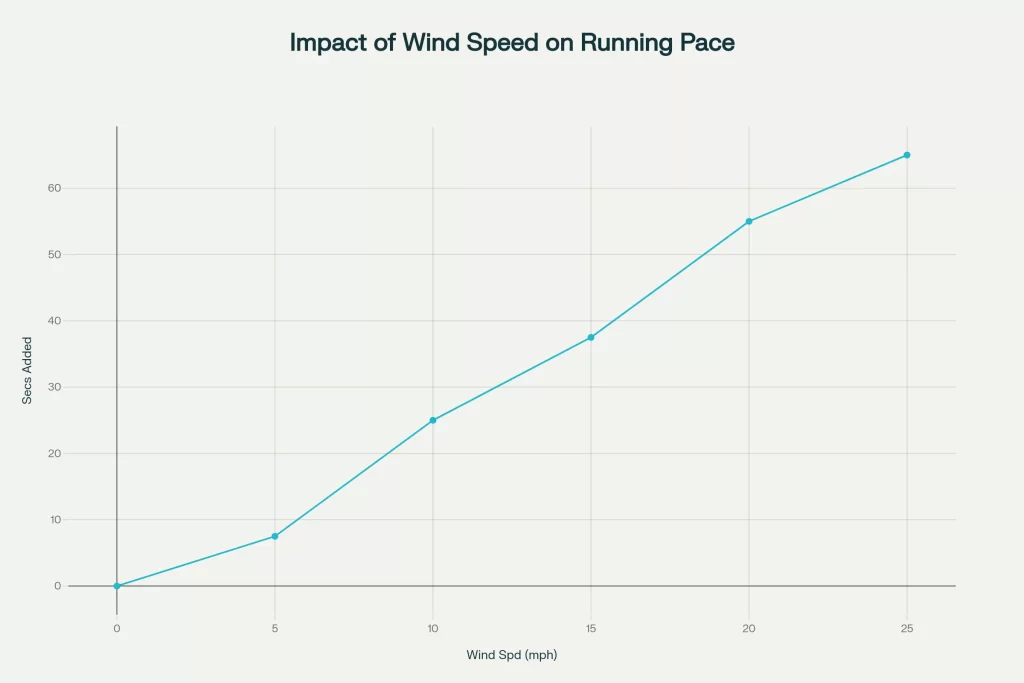
Tailwinds help, but not nearly as much. A strong headwind takes a big bite out of your pace. A tailwind gives back maybe half that, if you’re lucky.
Plan Smarter, Not Harder
Run into the wind first. Always. Start tough, finish easy.
Why? Because the first half is when you’re fresher. You’re better equipped mentally and physically to handle the drag. And if you’re sweaty by the second half, having the wind at your back will help stop you getting too cold.
Pick smart routes. Don’t run straight into a gale for five miles with no shelter. Look for loops with trees or buildings to break the wind. Stay away from open fields, bridges, or hilltops where gusts hit harder. If winds are pushing past 25 mph, maybe rethink that run altogether.
Dress Like You Mean It
Layers help. Start with a sweat-wicking base layer, add a warm one if it’s cold, then throw on a windproof shell. Keep everything snug. Baggy clothes just turn into mini parachutes.
Cover your head, hands, and neck. A snood or buff can stop the wind slicing across your face. Gloves are non-negotiable on cold, windy days. If it’s freezing, consider a balaclava. You’ll look like a ninja. That’s a bonus.
And tie your hair back. Nobody enjoys eating their ponytail mid-run.
Adjust Your Form
Whatever you do, don’t hunch. It’s the go-to reaction, but it’s bad for your breathing and burns extra energy. Instead, lean forward slightly from your ankles, not your waist. Keep your arms in tight and swing them along your sides.

Getting battered by crosswinds? Lean into them just a bit to stay balanced. If it’s a tailwind, don’t go flying. Keep your stride smooth and under control so you don’t end up overstriding or tweaking something.
If you’re going uphill and into the wind, break it down. Shorten your steps, keep the rhythm. It’ll feel like double effort, but it’ll pay off.
Group Runs: Draft Like a Pro
Drafting isn’t just for cyclists. Tuck in behind someone, and you’ll cut wind resistance by up to 80%. That’s a lot less work.
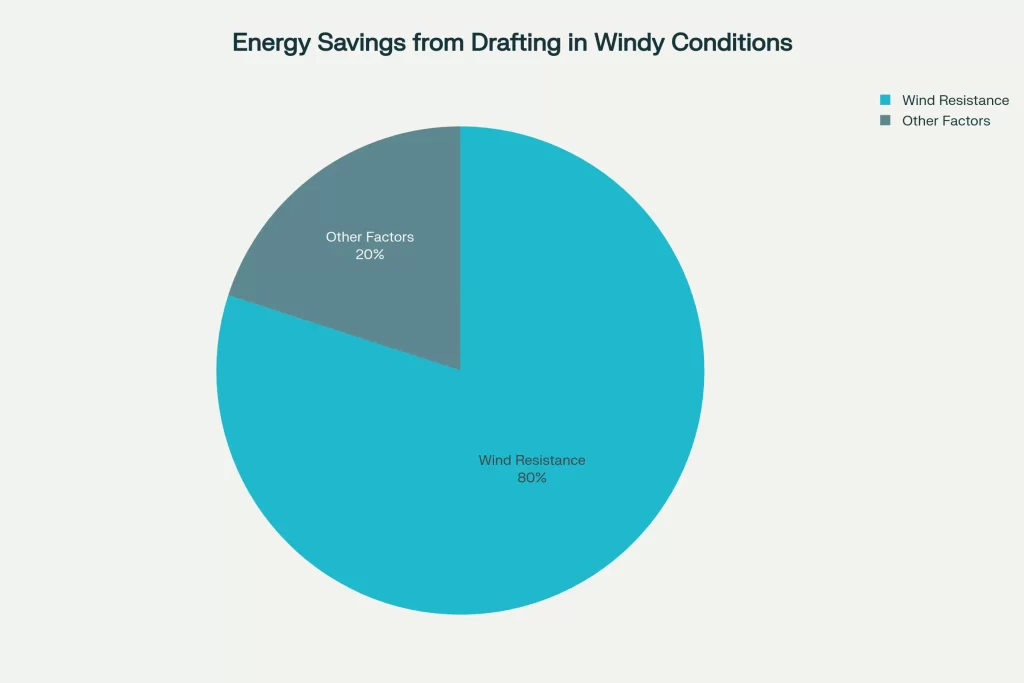
If you’re running in a group, rotate the lead. Everyone takes a turn up front, then drops back to recover. It’s simple, but effective. Just don’t breathe down someone’s neck. Give them space and a heads-up if you’re moving positions.
Ditch the Pace. Run by Feel.
Trying to hit exact splits in a headwind is a waste of energy. Focus on effort. Use your heart rate or RPE (rate of perceived exertion) as a guide. You’ll run slower into the wind, but that doesn’t mean you’re slacking.
You can even use the wind to your advantage. Treat it like resistance training. It builds strength without needing to increase speed or impact. Plus, finishing with the wind at your back feels like a reward. Try progressive runs where you start into the wind and finish faster with a tailwind.
Know When to Call It
If the forecast says 40+ mph winds and potential flying branches? Stay in. It’s not brave, it’s reckless.

Remove headphones so you can hear what’s happening around you. Wind makes it harder to hear oncoming traffic or other hazards. Visibility can be an issue, too, if there’s dust or debris.
Cold wind? Double-check the wind chill. It can drop the actual feel by a huge margin and increase your risk of hypothermia. Dress for the “feels like” temp, not just what your weather app says.
Breathe Like You Mean It
Strong winds can make breathing tricky. Try belly breathing, inhale deep into your diaphragm instead of taking shallow chest breaths. It helps you stay relaxed and efficient.
Can’t catch your breath? Angle your head slightly out of the wind. It creates a small buffer zone that makes breathing feel easier.
Nose breathing filters and warms the air, which helps in cold wind. But when you’re pushing hard, mouth breathing’s fine. Oxygen trumps technique when you’re gasping.
Get Your Head in the Right Place
You won’t always feel like running in the wind. That’s normal. But if you can change how you think about it, it gets easier.
Use mantras. Something simple like “stronger every step” or “you’ve got this” can pull you through tough miles. Speak to yourself like you’d talk to a mate. It works.
And remember, everyone else in the race is dealing with the same wind. It’s not just your struggle. That shift in perspective makes a big difference.
Wind and Fueling
Windy days can trick you into thinking you’re not sweating. But you are. Wind speeds up evaporation, so dehydration sneaks up fast.
Drink water, even if you’re not thirsty. Electrolytes help too, especially if it’s cold. The wind can actually make you pee more, yep, it’s a thing.
Eat normally before longer runs. Carbs two or three hours before is a safe bet. If your run’s over an hour, bring fuel. Gels or sports drinks work fine. Your body’s working harder, so give it something to run on.
Train for It
Don’t avoid windy runs forever. Build tolerance gradually. Start with short runs on breezy days, then work up. Practise drafting, breathing techniques, and adjusting your form so it becomes second nature.
If you’re doing intervals and the wind’s a nightmare, tweak your session. Run hard with the wind, jog into it. Or move your session inside if it’s dangerous, but still run outside sometimes to stay sharp.
Recover Right
After a windy run, your skin might feel like sandpaper. Use lip balm and moisturiser. Hydrate. And give your body time to cool down slowly, don’t just sprint inside and jump in a hot shower.
Wind training is legit. It builds strength, grit, and patience. And when race day hits and there’s a breeze, you’ll be ready for it.